
Cumaru wood ceiling: sizes, where to use, installation and care
Solid Cumaru ceiling, kiln-dried and with the Brazilian forest origin document (DOF): slat sizes, where it can go (indoors, porches, eaves and uncovered areas), finish, how it is installed on battens and how to care for it.
Published 15/11/2026 by the BTO team
Quick answers
What is a Cumaru wood ceiling?
It is a ceiling made of solid Cumaru slats, one of the densest and most durable woods in Brazil, brown in color. BTO kiln-dries the wood, machines it in its own factory and delivers it with or without varnish.
Can a Cumaru ceiling go outdoors?
Yes, in covered areas and also in uncovered areas, always with exterior varnish on all faces. Cumaru and Teak are the BTO woods that go on facades and uncovered areas.
What are the sizes of the Cumaru ceiling?
Slats of 2x1, 4x1 and 8x1 cm, 10 or 15 mm thick, in 2.00 m pieces. Each piece has the rabbet that forms the 1 cm reveal.
How is the Cumaru ceiling installed?
Directly on treated wood battens, fixed to the slab or the roof structure every 30 to 45 cm, with no drywall. Each piece is glued with PU adhesive and gets one pin per batten.
Does the wood have a legal origin?
Yes. BTO buys its solid wood with the DOF, the Brazilian forest origin document that follows each load from its origin.
How to care for a Cumaru ceiling?
Clean with a soft, slightly damp cloth, with no abrasives, solvents or bleach. Reapply varnish when water no longer beads on the surface.
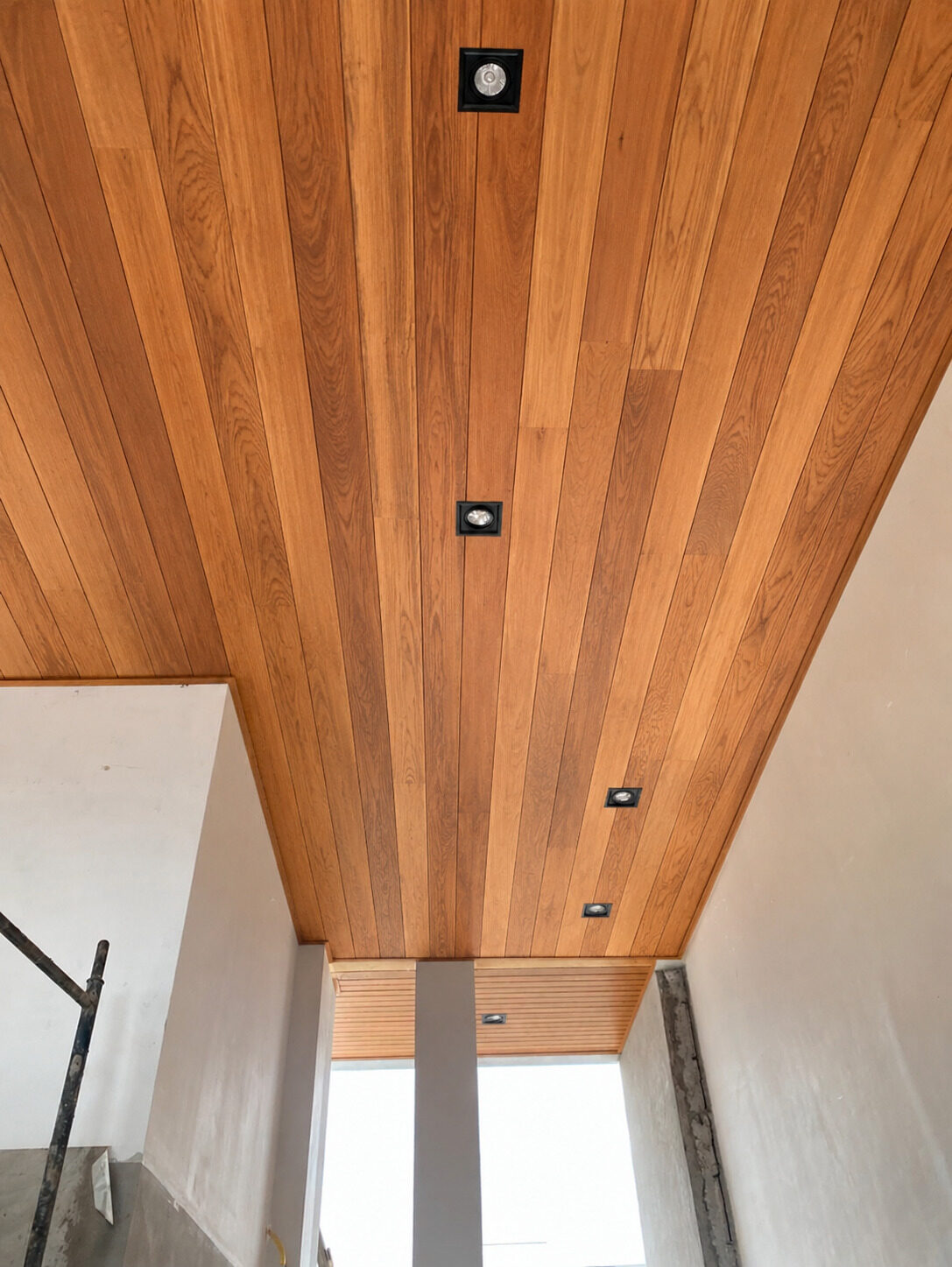
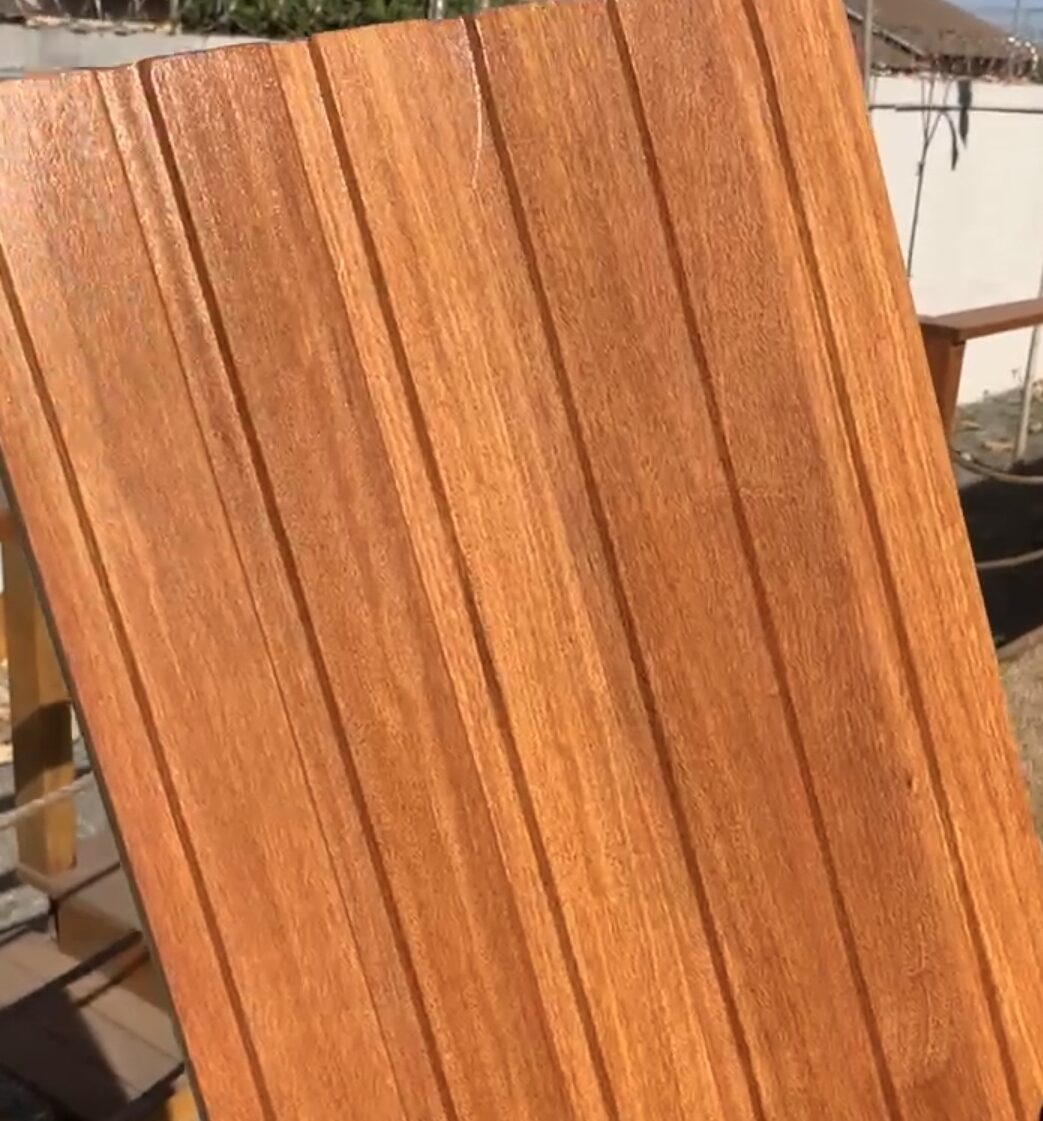
Why Cumaru for a ceiling
Cumaru (Dipteryx odorata) is one of the densest and hardest woods in Brazil: deep brown, bold grain and high natural durability. It is the choice for outdoor ceilings, facades and high-traffic areas. With light, the tone darkens and becomes more even.
| Species data | Reference value |
|---|---|
| Apparent density | 1,090 kg/m³, at 15% moisture |
| Janka hardness, dried to 12% | 13,100 to 15,700 N |
| Bending strength | 178,3 MPa |
| Radial and tangential shrinkage | 5.3% and 8.2% |
| Natural durability | High, heartwood resistant to fungi and termites |
Sources: IPT, Institute for Technological Research, and LPF, Brazilian Forest Service. These are reference values for the species, not tests of the product. Its higher shrinkage is the reason for kiln drying, acclimation and expansion gaps.
Where to use a Cumaru ceiling
| Where | Cumaru ceiling |
|---|---|
| Living room, kitchen, bedroom and hall | Yes |
| Covered porch, outdoor kitchen and eaves | Yes |
| Humid indoor areas, such as spas and covered pools | Yes |
| Uncovered areas and facades | Yes, with exterior varnish on all faces |
| Direct contact with soil or standing water | Not recommended |
To compare with the other woods, see Cumaru, Tauari or Teak. For exterior walls, see wood facades.
Slat sizes
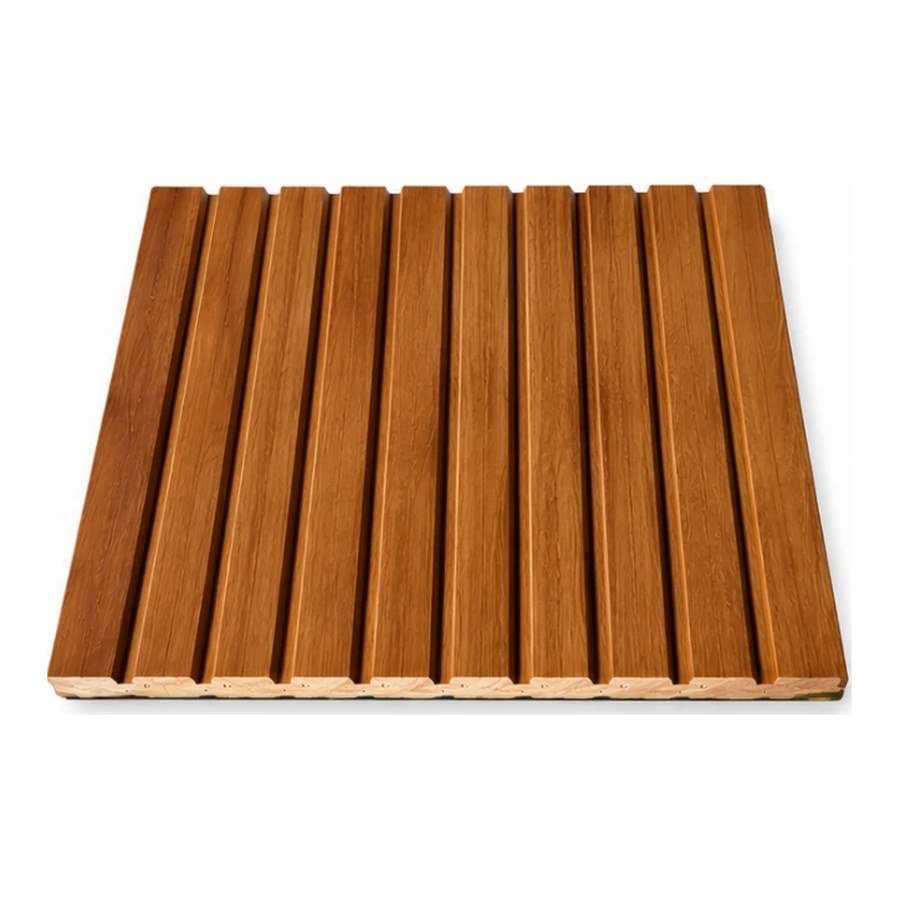
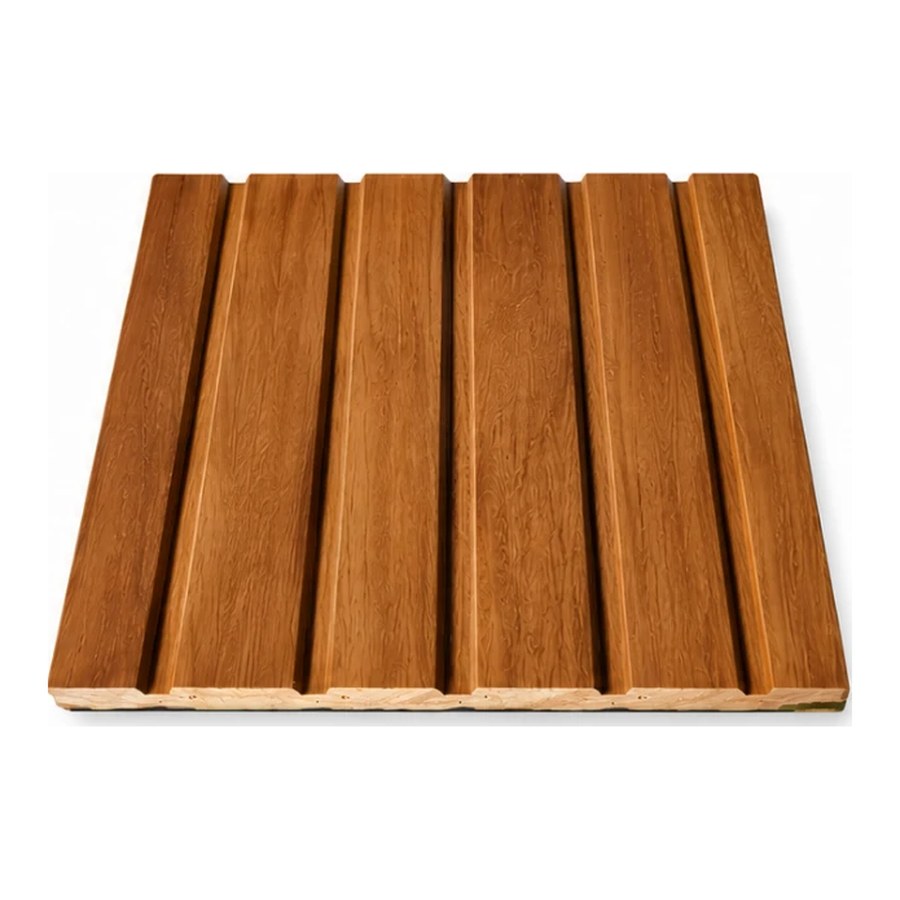
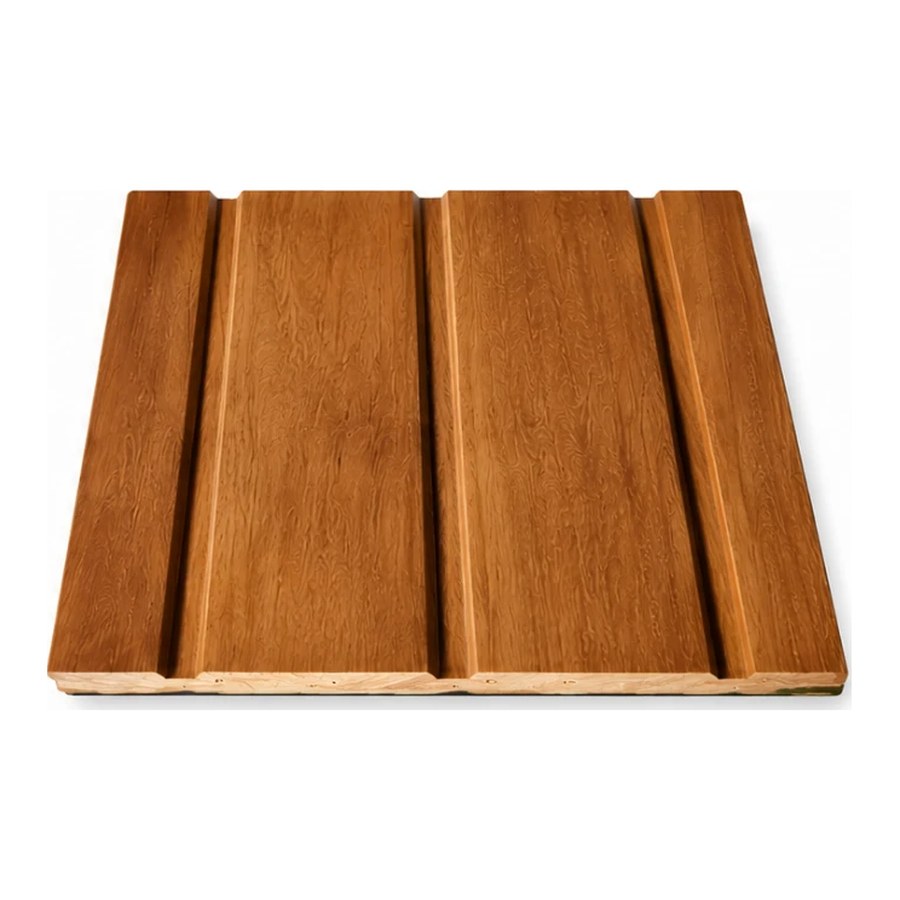
10 or 15 mm thick · 2.00 m pieces · with or without factory varnish
From forest to ceiling: drying, origin and finish
- Legal origin: the wood is bought with the DOF, the Brazilian forest origin document that follows each load.
- Kiln drying: controlled drying removes excess moisture and helps minimize movement, warping and cracking.
- Machined in its own factory: BTO does not resell wood. It selects, dries, machines and finishes the wood in its own factory, since 1980.
- Finish: the automatic line sands the visible face and applies the varnish; the piece can also leave unfinished, for finishing on site. Outdoors, exterior varnish (spar, PU or similar) on all faces, before installation.
See the full data and the spec sheet on the solid Cumaru page.
How the Cumaru ceiling is installed
- Acclimate: leave the wood on site for at least 72 hours and varnish all faces before installing.
- Battens: treated wood, fixed to the slab or the roof structure, every 30 to 45 cm and leveled with a laser. No drywall.
- Glue and pin: a bead of PU adhesive on the battens and one pin per batten, with a pneumatic nailer.
- Fit: each piece goes into the rabbet of the previous one, with staggered joints always over a batten.
- Gap: 1 cm at the sides for expansion. Cumaru is very hard, so screws need pre-drilling; use stainless steel or galvanized pins and screws.
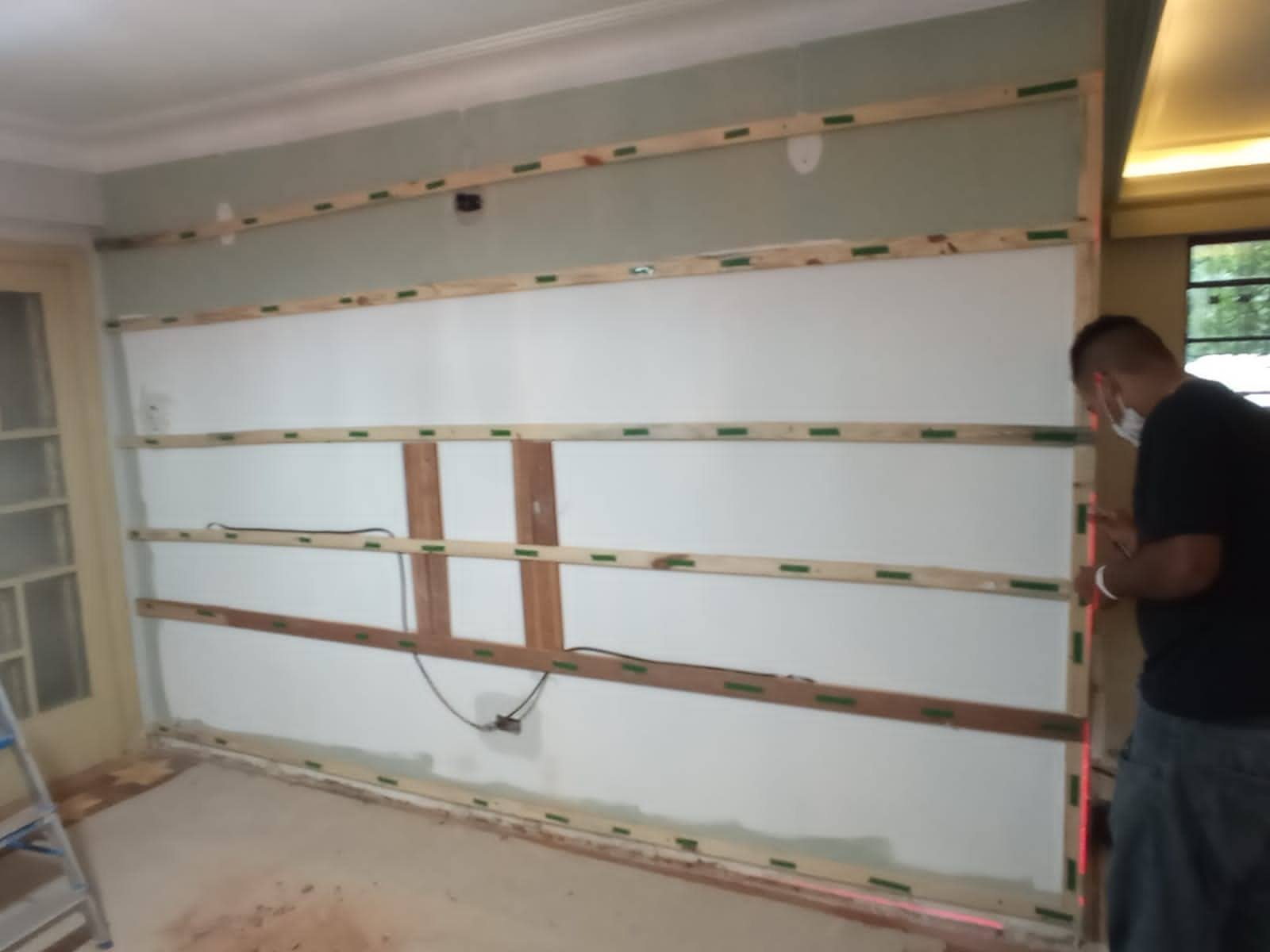
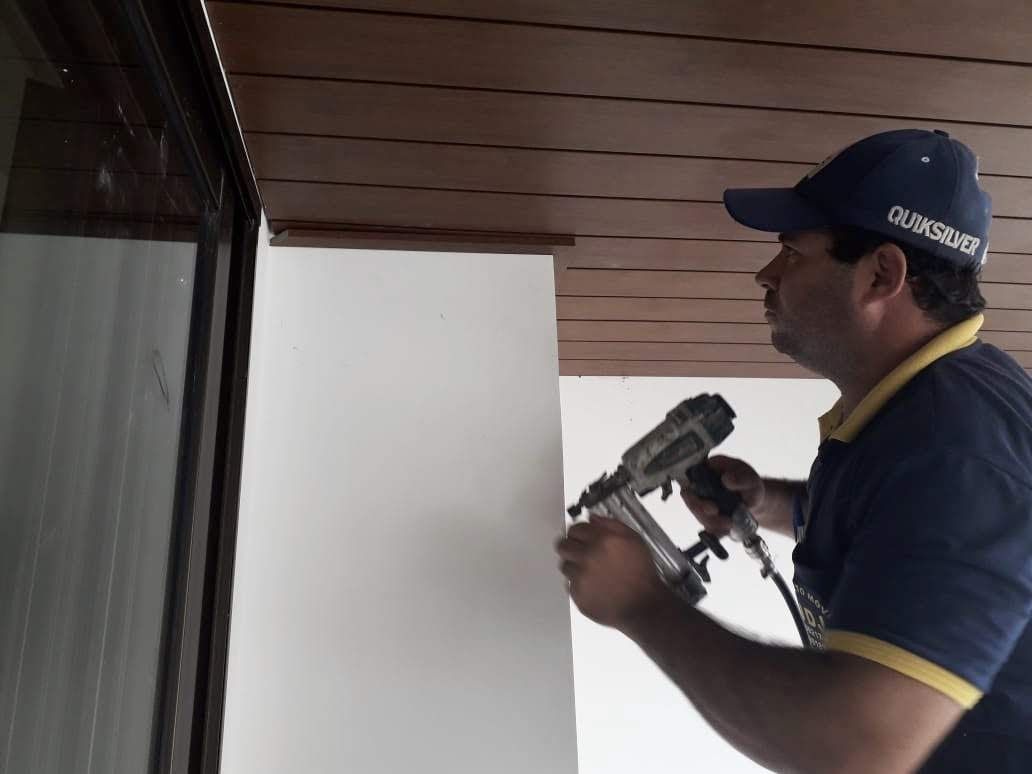
BTO provides technical support and installation manuals. The full step by step is in the solid wood manual and in how to install.
Care and maintenance
- Clean with a soft, slightly damp cloth, with no abrasives, solvents or bleach.
- Reapply varnish when water no longer beads on the surface. Indoors this is rare; with sun and rain, it is more frequent.
- Over time the wood changes tone; with light sanding and new varnish, it looks new again.
- Do not hang light fixtures directly from the ceiling: use a proper support fixed to the slab or the structure.
What changes the quote
The site shows no prices because every ceiling is a project. The quote depends on the width and thickness of the slat, the finish, the area, the cutouts for lights, installation and shipping. Solid wood has a minimum order, combining the same wood in one order. See also what changes the price of a wood ceiling.
Frequently asked questions
Does a Cumaru ceiling need drywall?
No. A solid wood ceiling goes directly on battens, with no drywall.
What is the difference between a Cumaru and a Teak ceiling?
Cumaru is brown, dense and very durable; Teak is golden and very stable. Both can go even in uncovered areas and on facades.
What is the lead time for a Cumaru ceiling?
Solid wood ceilings take 40 to 70 days, plus shipping.
Does Cumaru change color over time?
Slowly, like any natural material exposed to light: the tone darkens and becomes more even. With light sanding and new varnish, it looks new again.
Summary
BTO's Cumaru ceiling is solid wood, kiln-dried and with the DOF, in 2x1, 4x1 and 8x1 cm slats, 10 or 15 mm thick. It goes indoors, in covered outdoor areas and also in uncovered areas, always with exterior varnish. It is installed directly on battens, with no drywall, using PU adhesive and pins.
Keep reading
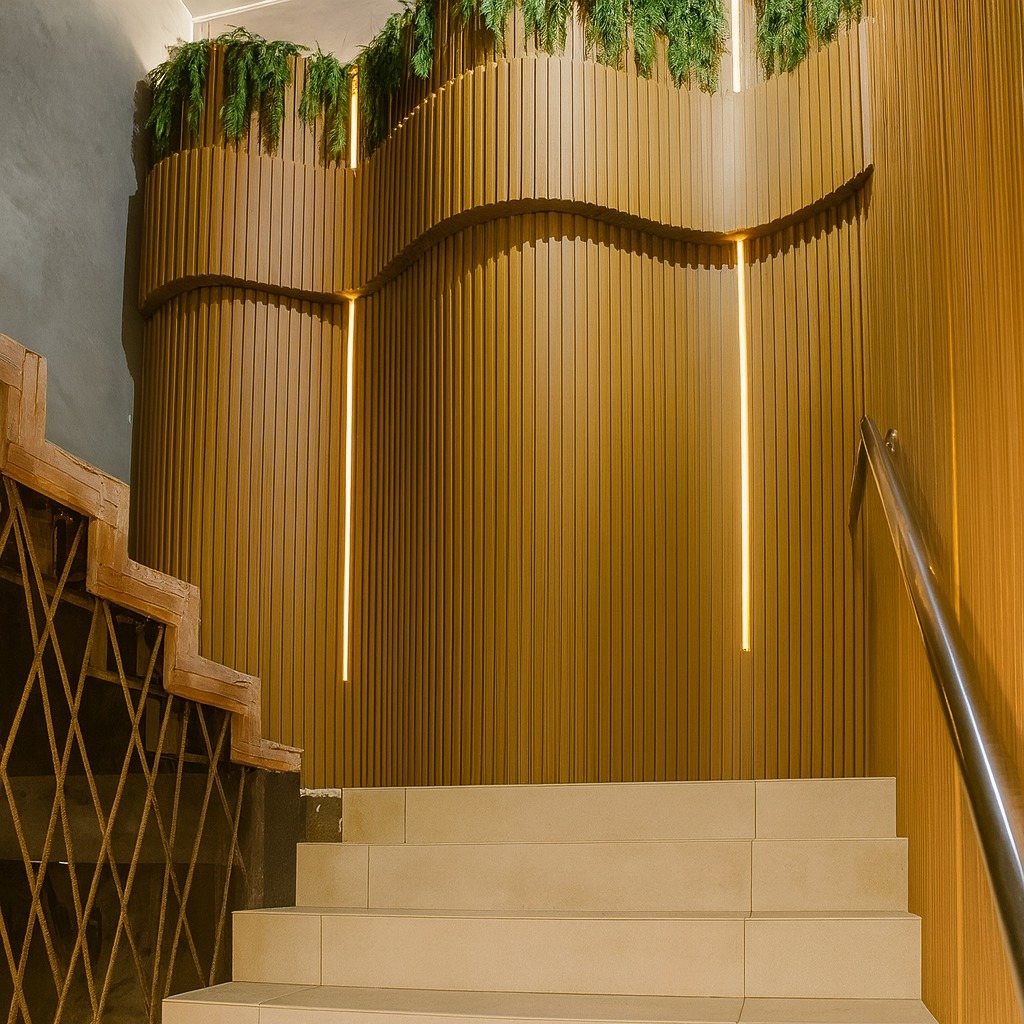
Flexible wood slat panels: how they curve, where to use them and the minimum radius
BTO's flexible wood slat panel bends by hand and curves horizontally and vertically, with a minimum radius of 80 cm. Corais Collection and StickTech with adhesive film: where to use, how to install and what changes the quote.
Read the article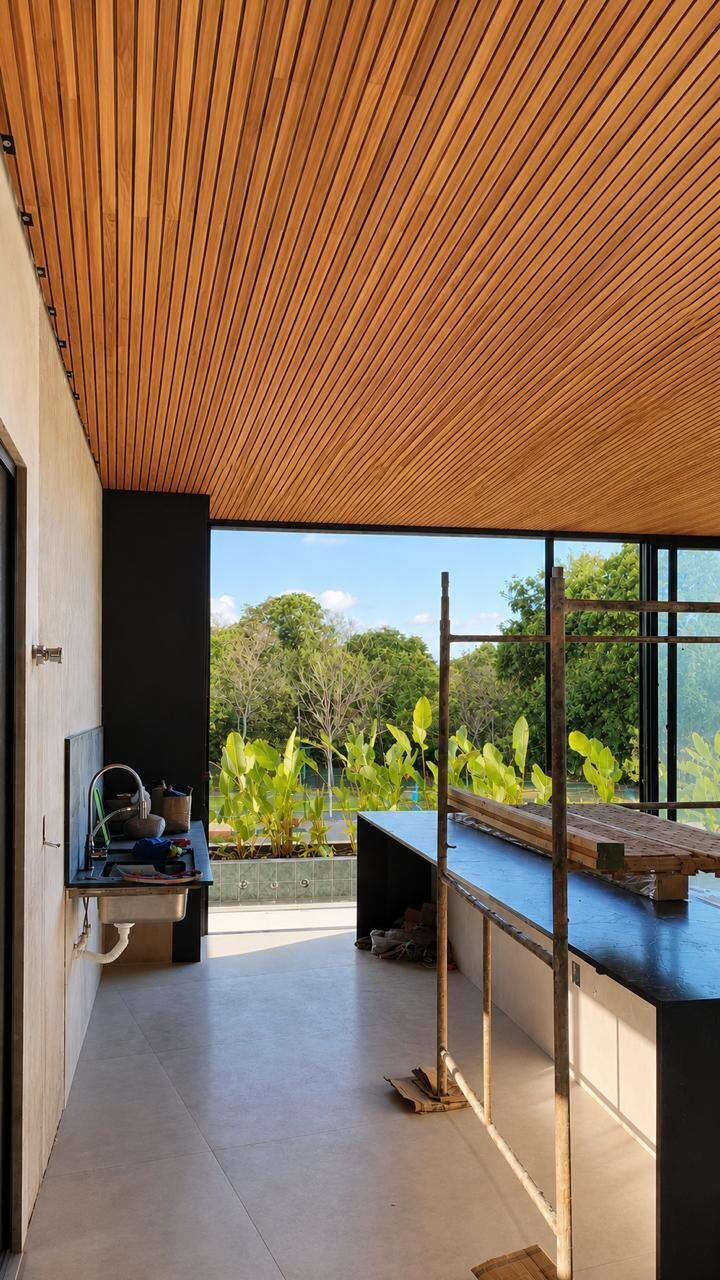
Wood ceiling: what changes the price per m² and which wood to choose
What drives the price of a wood ceiling, which wood to use where, wood or PVC, measurements and maintenance.
Read the article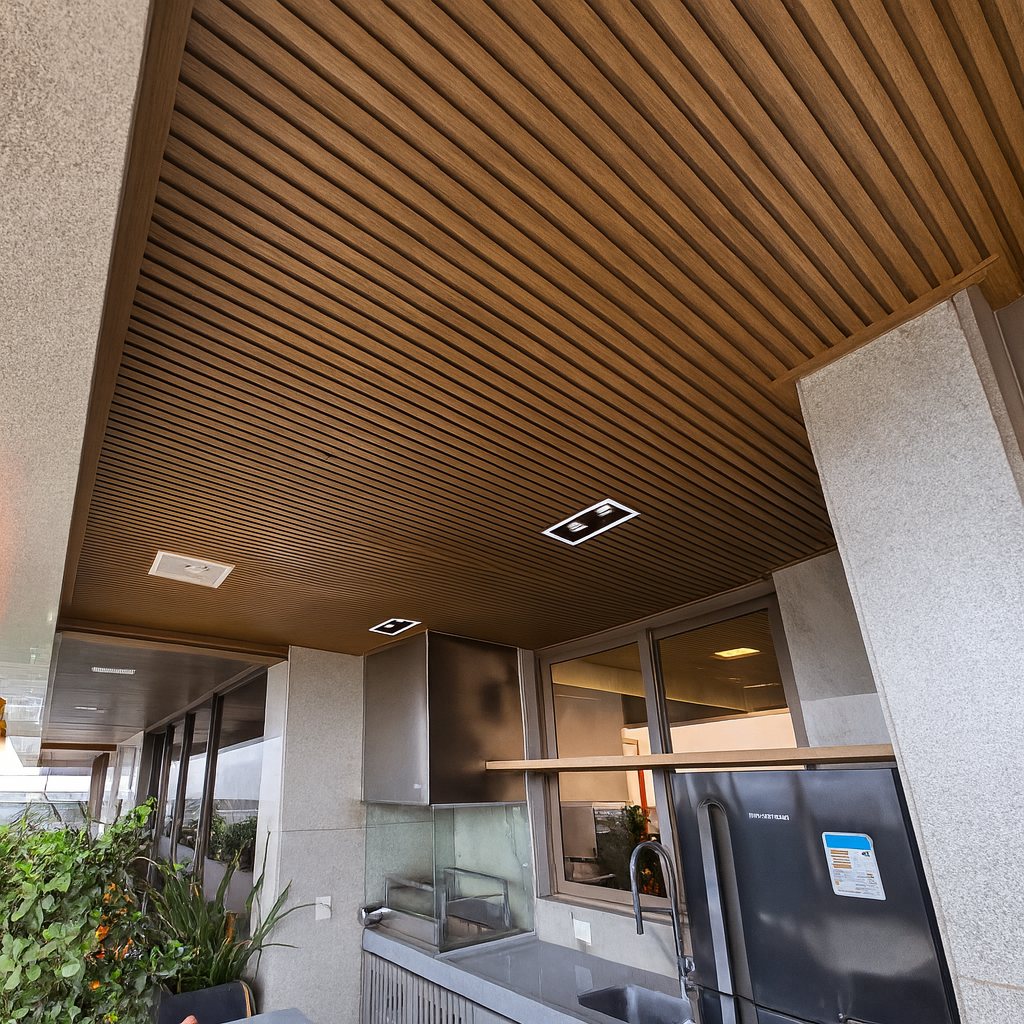
Outdoor slat panels and ceilings: porch, outdoor kitchen and facade
What can go on each outdoor part of the house: covered outdoor areas, uncovered areas and facades, with the right wood and the care each one needs.
Read the articleNeed help with your project?
Send the measurements and get a quote with shipping and lead time.